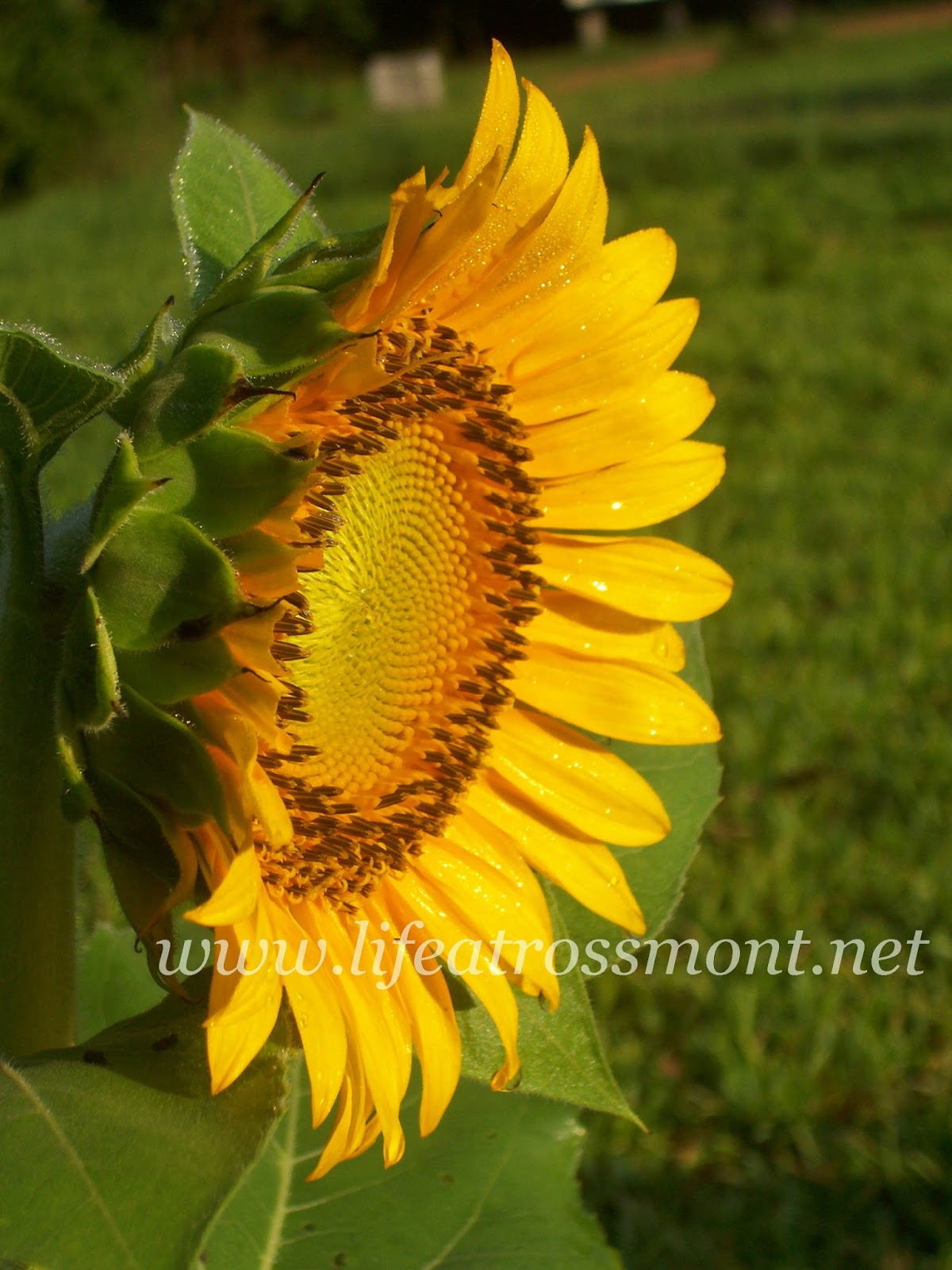
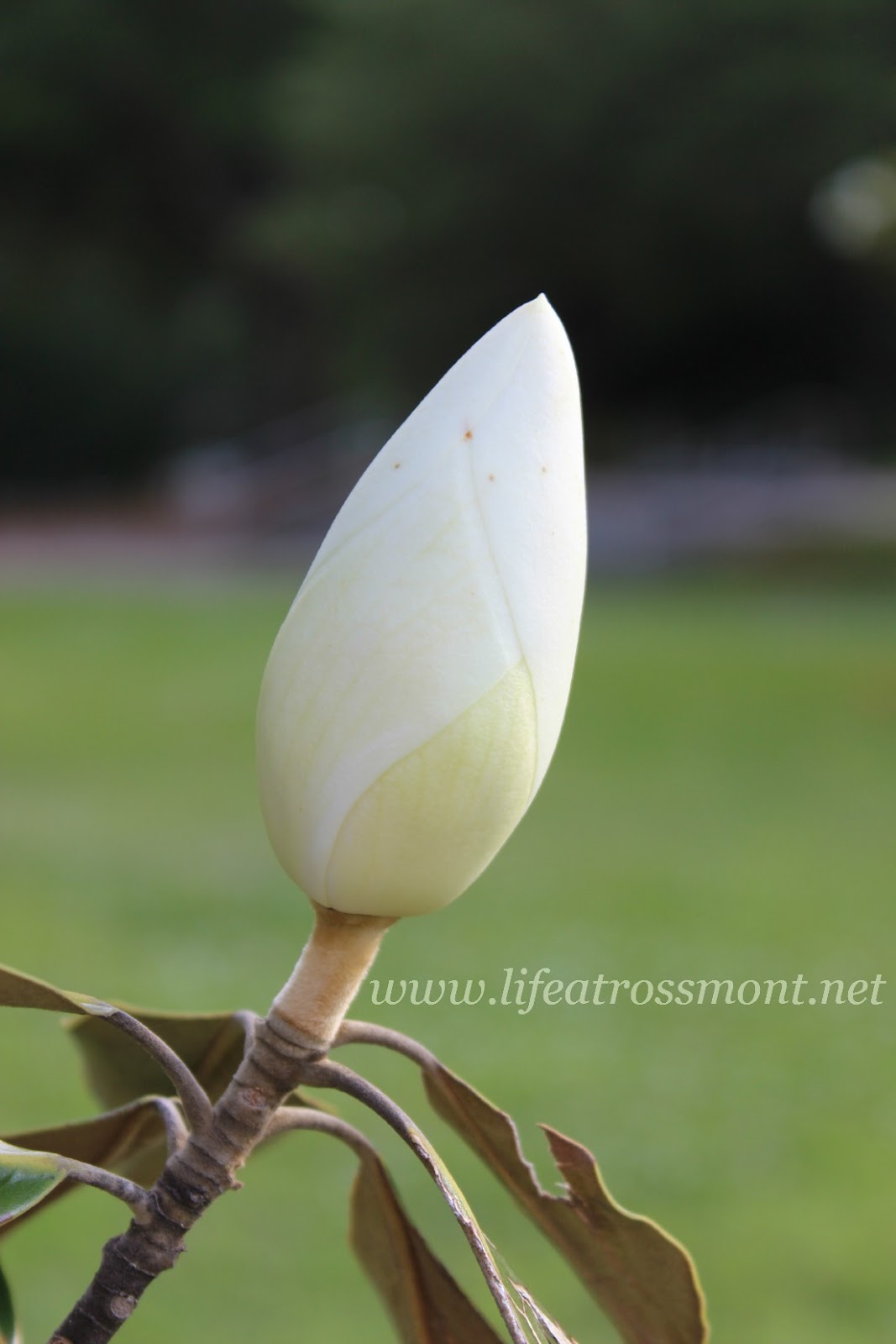
Showing posts with label Nature Sketches. Show all posts

Thursday, September 12, 2013

Z is for Zinnia

Z is for Zinnia
We're wrapping up this round of "Blogging Through the Alphabet" with, what else? the Zinnia!
Zinnia is a genus of 20 species of annual and perennial plants of the family Asteraceae. They are native to scrub and dry grassland in an area stretching from the Southwestern United States to South America, with a center of diversity in Mexico. Zinnias are popular garden flowers, usually grown from seed, and preferably in fertile, humus-rich, and well-drained soil, in an area with full sun. They will reseed themselves each year. Over 100 cultivars have been produced since selective breeding started in the 19th century.(Wikipedia)
How to Plant, Grow and Care for Zinnias
The Care and Maintenance of Zinnia Flowers
Variety of Zinnias
Growing Guide for Zinnias: Organic Gardening

What other flowers or plants can you think of which begin with the letter "Z"?
 Be sure to join the others who are Blogging Through the Alphabet.

Thus ends this round of Blogging Through the Alphabet. Marcy plans a brief break, then we'll start up a new round on October 7.
Pin It Now!

Friday, August 23, 2013

W is for Wisteria

W is for Wisteria
Aren't wisteria blossoms a lovely color? The blossoms also remind me of sweet pea blossoms, as well they should since they are in the same family.

Our wisteria usually blooms in March or April, and I look forward to seeing them each year. Wisteria is very hardy and fast-growing. It can grow in fairly poor-quality soils, but prefers fertile, moist, well-drained soil. It thrives in full sun.

Wisteria can grow into a mound when unsupported, but is at its best when allowed to clamber up a tree, pergola, wall, or other supporting structure. Whatever the case, the support must be very sturdy, because mature Wisteria can become immensely strong with heavy wrist-thick trunks and stems. These will certainly rend latticework, crush thin wooden posts, and can even strangle large trees. Wisteria allowed to grow on houses can cause damage to gutters, downspouts, and similar structures. (Wikipedia)

The Old Farmer's Almanac provides some information about wisteria. And here is a fact sheet from the Ohio State University.

Can you think of any other flowers or plants which begin with "W"? How about "X"?!
Be sure to join the others who are Blogging Through the Alphabet.

Please be sure to subscribe to follow my blog, so you won't miss anything. For your convenience, I have linked up several possibilities for you to do so, if you'll notice over in the sidebar.

Pin It Now!

Tuesday, August 13, 2013

V is for Violets

V is for Violets

Well, it seems I don't have any photos of my own of violets, either! That's too bad, and a little sad, since violets are so sweet, and one of my favorites.
When we talked about pansies awhile back, we learned that they and violets are related. Now I see it seems the names violet and viola are interchangeable.
Violets (Viola) are a genus of flowering plants in the family Violaceae, with around 400-500 species throughout the world, mainly in the temperate Northern Hemisphere but also in Hawaii, Australasia, and the Andes in South America. They are typically found in moist and slightly shaded conditions such as hedgerows.

Most violets are small perennial plants, but a few are annual plants and some are small shrubs. They typically have heart-shaped leaves, and asymmetrical flowers with four upswept or fan-shaped petals, two each side, and one broad, lobed lower petal pointing downward. The shape of the petals defines many species, for example, some violets have a "spur" on the end of each petal. Flower colours vary in the genus; many are violet as their name suggests, and some are blue, some yellow, some white, some cream; some are bicolored, often blue and yellow. Flowering is often profuse, and may last for much of the spring and summer
. (Violets.com)(Wikipedia)
Sweet violets, violas, and pansies are annual or perennial flowers that are mostly grown for their beauty. The flowers and leaves are edible and can be used in a variety of dishes — not just for a garnish or to top a salad. Sweet violets (Viola odorata) can be candied or used in violet tea, violet cake, and violet syrup. While commonly added to salads, you can also use violet flowers to make vinegars, butters, spreads, and jellies. Sweet violet flowers are as beautiful as they are edible. Their white, pink, blue, or lavender blooms have a sweeter, more perfumed taste than the more colorful blooms of annual violas and pansies. Sweet violet leaves are slightly tart. (Edible Landscaping)

On the subject of Pansies, Violas and Violettas
The American Violet Society
African Violet Society of America

My mother has a few African Violets. I remember when I was a little girl, she had two or three tables of African Violets, under grow lights, in the basement of the house we lived in where we lived in Michigan. Someday I'd like to have some, or at least a couple, ourselves. I think my Botanist Boy would enjoy that, too.

Can you think of any other flowers or plants which begin with the letter "V"?
Be sure to join the others who are Blogging Through the Alphabet.

Please be sure to subscribe to follow my blog, so you won't miss anything. For your convenience, I have linked up several possibilities for you to do so, if you'll notice over in the sidebar.
Pin It Now!

Tuesday, August 6, 2013

U is for Umbrella Magnolia

U is for Umbrella Magnolia

This is another letter for which I don't have a photo of my own to share. I'm sharing this one, from Alabama Plants. Please go there, to see more photos.
The scientific name for the Umbrella Magnolia, or Umbrella-tree, is Magnolia tripetala. This deciduous tree is native to southeastern United States, particularly to the Appalachian Mountains. The leaves are large, 12-24 inches long. The flowers are white, and apparently have an unpleasant odor.

I think I've seen one or two Umbrella Magnolias around town here.

Another "U" plant is the Umbrella Plant, or Schefflara arboricola, or just Schefflara. It is native to Taiwan. It can be grown as a shrub, but is most commonly a houseplant. I think my mother has always had one, and I am pretty sure my Botanist Boy would enjoy having one, too. Here's how to care for an Umbrella Plant.  

What other flowers or plants can you think of which begin with "U"?

P.S. In case you're wondering: yeah, I'm not really looking forward to reaching the letter "X"! Would you like to help me think of a flower or plant which begins with "X"?
Be sure to join the others who are Blogging Through the Alphabet.

Please be sure to subscribe to follow my blog, so you won't miss anything. For your convenience, I have linked up several possibilities for you to do so, if you'll notice over in the sidebar.

Pin It Now!

Tuesday, July 30, 2013

T is for Tulips

T is for Tulips

I received these tulips from my children for Mother's Day last year. Aren't they lovely?!

Tulips are almost synonymous with spring, aren't they? They're spring-blooming, bulbous perennials, which can grow as short as 4 inches, or as tall as 28 inches.

Although tulips are often associated with the Netherlands, commercial cultivation of the flower began in early Persia probably somewhere in the 10th Century. (Wikipedia)

Tulips do best in areas with dry summers and cold winters. The brightly colored, upright flowers may be single or double, and vary in shape from simple cups, bowls, and goblets to more complex forms. They are excellent in beds and borders; many types are good for forcing into bloom indoors, and most are excellent for cut flowers.

Although tulips are a perennial, many gardeners treat them as annuals, to be planted anew each year. The North American climate and soil can't replicate the ancient Anatolian and southern Russian conditions of their birth. Gardeners in our western mountain regions come closest to this climate. (Old Farmer's Almanac)
Here are tips for growing tulips.

I have heard about the Skagit tulip festival, but have never been. Have you? I think it'd be lovely to go. Then there is the Tulip Time Festival, in Holland, Michigan. Maybe some day I can take my youngest two boys to one or the other.

Tulips
By A. E. Stallings


The tulips make me want to paint,
Something about the way they drop
Their petals on the tabletop
And do not wilt so much as faint,

Something about their burnt-out hearts,
Something about their pallid stems
Wearing decay like diadems,
Parading finishes like starts,

Something about the way they twist
As if to catch the last applause,
And drink the moment through long straws,
And how, tomorrow, they’ll be missed.

The way they’re somehow getting clearer,
The tulips make me want to see—
The tulips make the other me
(The backwards one who’s in the mirror,

The one who can’t tell left from right),
Glance now over the wrong shoulder
To watch them get a little older
And give themselves up to the light.

Source: Poetry (June 2009).

Poetry Foundation


Here is another poem about tulips.

Tulips in Holland.
Wooden Shoe Tulip Farm 

What other flowers or plants can you think of which begin with "T"?
Be sure to join the others who are Blogging Through the Alphabet.

Please be sure to subscribe to follow my blog, so you won't miss anything. For your convenience, I have linked up several possibilities for you to do so, if you'll notice over in the sidebar. Pin It Now!
Tuesday, July 23, 2013

S is for Sunflower

S is for Sunflower
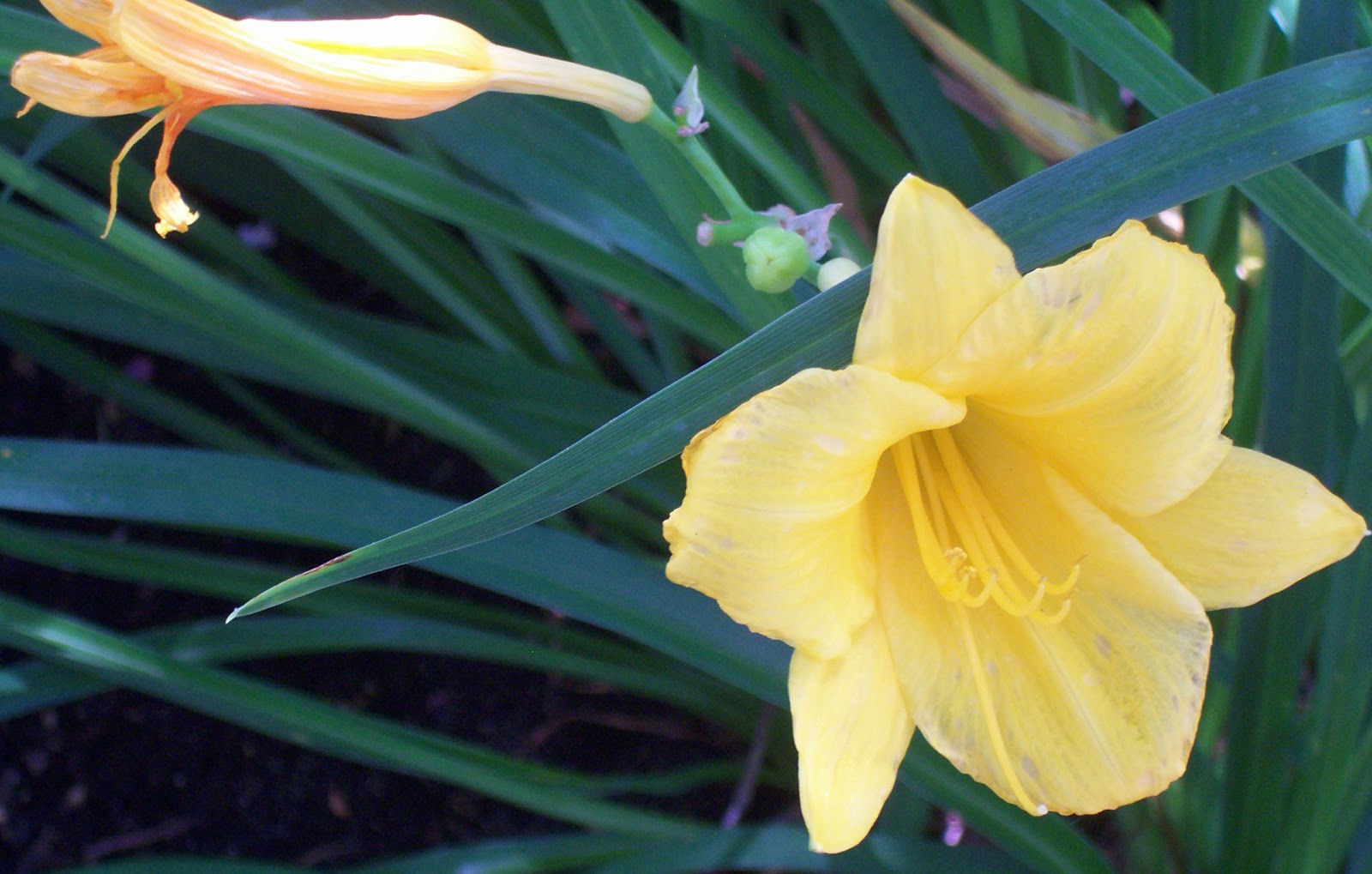
Yes, you saw this one coming, didn't you? When I think of "S" for flowers, sunflower is certainly the first one to come to my mind.

When I think of sunflowers, I think of Kansas, the Sunflower State. The sunflower is the state flower of Kansas. Incidentally, I lived in Kansas a couple years, when I was around the ages of my oldest two children. I remember seeing field after field of sunflowers. Such cheery, sunny flowers!
The sunflower (Helianthus annuus) is an annual plant native to the Americas. It possesses a large inflorescence (flowering head), and its name is derived from the flower's shape and image, which is often used to depict the sun. The plant has a rough, hairy stem, broad, coarsely toothed, rough leaves, and circular heads of tangential petals. The heads consist of many individual flowers which mature into seeds, often in the hundreds, on a receptacle base. From the Americas, sunflower seeds were brought to Europe in the 16th century, where, along with sunflower oil, they became a widespread cooking ingredient. Leaves of the sunflower can be used as cattle feed, while the stems contain a fibre which may be used in paper production. (Wikipedia)
Not only are sunflowers beautiful to look at, but their seeds are important nutritionally. They are a tasty snack, but are also useful in various dishes.

I'll share a few recipes:

Sunny Banana Pancakes

3 cups whole wheat flour
½ tsp. salt
1 T. aluminum-free baking powder
2 eggs
2 T. oil
2 T. honey
2 ½ cups milk
1 cup chopped sunflower seeds
2 diced bananas

Mix dry ingredients. In another bowl, beat eggs, oil, honey, and milk. Add to dry ingredients and stir just until blended. Stir in seeds and bananas. Makes 25-30 small pancakes.

Variation: for extra nutrition add 1 T. each of ground chia seeds, sesame seeds, and 1 T. nutritional yeast flakes. (Sometime I'll experiment with this one, to make it vegan)

Oatburgers

1 ½ c. water
½ unfermented soy sauce (Bragg’s Liquid Aminos)
4 ½ c. rolled oats
¼ c. oil
1 large onion, chopped
½ t. garlic powder
1 c. sunflower seeds
½ t. Italian seasoning
2 T. nutritional yeast flakes

Bring water and soy sauce to boil; add oats and cook for about 8 minutes on medium heat. Set aside to cool. Saute onions in skillet until tender. Add to the oat mixture. Mix in rest of ingredients. Form into patties. Bake at 350 approximately 10 minutes each side.

Sunflower Seed Sour Cream

2/3 c. sunflower seeds
¾ c. water
½ t. salt
2 T. lemon juice
¼ t. garlic powder
½ t. onion powder

Place all ingredients in blender, and blend until smooth.


In case you haven't discovered yet, we love feeding and watching our backyard birds. Their favorite seed is sunflower. We buy large bags of it at the feed store, just plain sunflower seeds, nothing else mixed in.

Here's a fun time-lapse video to show your kids, of a sunflower blossom.

Other interesting resources about sunflowers:

How to draw a sunflower

Can you think of any other flowers or plant which begin with "S"?

Be sure to join the others who are Blogging Through the Alphabet.

Please be sure to subscribe to follow my blog, so you won't miss anything. For your convenience, I have linked up several possibilities for you to do so, if you'll notice over in the sidebar.

Pin It Now!

Tuesday, July 16, 2013

R is for Roses

R is for Roses
My tea rose
Roses
~by George Eliot
You love the roses - so do I. I wish
The sky would rain down roses, as they rain
From off the shaken bush. Why will it not?
Then all the valley would be pink and white
And soft to tread on. They would fall as light
As feathers, smelling sweet; and it would be
Like sleeping and like waking, all at once!


Miniature rose
A rose is a woody perennial of the genus Rosa, within the family Rosaceae. There are over 100 species. They form a group of plants that can be erect shrubs, climbing or trailing with stems that are often armed with sharp prickles. Flowers vary in size and shape and are usually large and showy, in colours ranging from white through yellows and reds. Most species are native to Asia, with smaller numbers native to Europe, North America, and northwest Africa.

Rose plants range in size from compact, miniature roses, to climbers that can reach 7 meters in height. (from Wikipedia)
Red rose
I'll admit, I love roses! They rank in my top three favorite flowers. I'll admit something else: I don't seem to know how to care for them well enough so that they'll grow and thrive for me. I guess I need to invest in some rose-care books or something.

A few years back (I think in 2009) my two youngest boys bought me two rose bushes for Mother's Day, the tea rose, and the red rose. It seems like the tea rose has died, is very nearly dead. This really saddens me.

Even my miniature rose isn't looking very well.

Perhaps I need to investigate some of these resources myself!
How to Grow Roses
All-America Rose Selection
American Rose Society

Books:
Roses for Dummies (that'd be me!)
Roses: Placing Roses, Planting & Care, The Best Varieties
Everyday Roses: How to Grow Knock Out® and Other Easy-Care Garden Roses

What other flowers or plants can you think of with begin with the letter "R"?
Be sure to join the others who are Blogging Through the Alphabet.

Please be sure to subscribe to follow my blog, so you won't miss anything. For your convenience, I have linked up several possibilities for you to do so, if you'll notice over in the sidebar.

Pin It Now!

Tuesday, July 9, 2013

Q is for Queen Anne's Lace

Q is for Queen Anne's Lace

This was one of those letters for which I had to plan ahead!

On Mother's Day, when we went to visit my mother-in-law, as we were driving along one of the back roads, I saw these Queen Anne's Lace; I immediately said to my husband, "Oh, please stop! I need to take pictures of this flower, for my "Blogging Through the Alphabet" post for the letter "Q"!"

Patiently, he did. Aren't they lovely?
Queen Anne's Lace is the common name which most often refers to the species Daucus carota. Queen Anne's Lace was introduced from Europe as a medicinal plant, from which the vegetable, carrot, was bred.
A couple more resources for information about Queen Anne's Lace:
USDA Plants Database
Queen Anne's Lace

The taproots of Queen Anne's Lace are wild carrots, and are edible. Be cautious when handling this plant, though. Skin irritation is common. Also, there is a similar-looking plant, called Water Hemlock, which is deadly to eat, so beware. Don’t attempt to eat the Queen Anne’s Lace roots unless you have positive identification from an expert.

Another thing I learned is that women have used the seeds from Queen Anne's Lace for centuries as a contraceptive.

What other flowers or plants can you think of which begin with the letter "Q"?
Be sure to join the others who are Blogging Through the Alphabet.

Please be sure to subscribe to follow my blog, so you won't miss anything. For your convenience, I have linked up several possibilities for you to do so, if you'll notice over in the sidebar.

Pin It Now!

Tuesday, July 2, 2013

P is for Pansy

P is for Pansy

Pansies look like they have little faces, don't they? I think the pansy is a favorite of many people. Pansies just look so happy and cheerful!

The pansy is a group of large-flowered hybrid plants cultivated as garden flowers. Pansies are in the Viola genus. I was reading that Lady Mary Elizabeth Bennet, daughter of the Lord of Tankerville, along with her gardener, William Richardson, produced a large variety of plants, via cross-breeding. She introduced her pansies to the horticultural world in 1812. (I think I will need to have my Botanist Boy study about her, soon.)

I like the fact that around here, pansies seem able to grow through the winter even. 

Some resources for you to check out:
Old Farmer's Almanac
Better Homes and Gardens
Pansies in the Landscape
Pansies--Growing a Cool Weather Favorite
All About Pansies

What other flowers or plants can you think of which begin with the letter "P"?

Be sure to join the others who are Blogging Through the Alphabet.

Please be sure to subscribe to follow my blog, so you won't miss anything. For your convenience, I have linked up several possibilities for you to do so, if you'll notice over in the sidebar.

Pin It Now!

Tuesday, June 25, 2013

O is for Orchid

O is for Orchid


I think one of our most favorite flower is the orchid, the "our" being my mother, Botanist Boy, and me. My mother certainly has some beautiful specimens!

My mother gave one to Botanist Boy for his thirteenth birthday. She'd given him one for Christmas a couple years before that, but we didn't have much success keeping that one alive. He seems to be having better "luck" with this one.

A majority of orchids are perennial epiphytes, which grow anchored to trees or shrubs in the tropics and subtropics. One important use of orchids is their cultivation for the enjoyment of the flowers. Orchids of all types are often sought by collectors. Therefore, many hundreds of societies and clubs worldwide have been established.

You might wish to see if you can find one locally. I know my parents joined one not far from their home, in Florida.

Orchid Care Tips
American Orchid Society
Orchid Care Tips newsletter

Orchid *books for Kindle:
Orchids Made Easy - A simple Step by Step Guide to Grow Orchids for Beginners
How to Grow Orchids: A Guide to Growing Orchids for Beginners
Growing Orchids Like A Pro: The Complete Guide on How to Grow Orchids Indoors & Outdoors, and How to Care for Your Orchids so They Bloom Year after Year
How to Care for Orchids So They Live & Grow Them Correctly So They Bloom: Learn How You Can Care for Your Orchids Quickly & Easily The Right Way Before You Kill Them Slowly & Painfully The Wrong Way
Orchid Care: Growing and Caring for Orchids Indoors & Out

*Note these are not affiliate links*

Can you think of any other flowers or plants which begin with "O"?

Be sure to join the others who are Blogging Through the Alphabet.

Please be sure to subscribe to follow my blog, so you won't miss anything. For your convenience, I have linked up several possibilities for you to do so, just look over in the sidebar, or up at the top, through RSS feed.

Pin It Now!

Tuesday, June 18, 2013

N is for. . .

N is for Nippon Daisy

Well, we've finally come to a letter/flower for which I have no picture I've taken myself! N.

I originally thought I'd be using Narcissus, but I used it as Jonquil instead.

There were a couple other flowers I could have chosen: Nippon Daisy, or Nothoscordum (false garlic), but I don't have photos of them. Unless this is a Nippon Daisy:

It doesn't look like most of the images here, so I am just not sure. Here's a little more information about them, anyway:

Plant Encyclopedia
About.com Landscaping

N is for Nasturtium

My main flower for the letter "N" is the Nasturium. I find the Nasturium to be an interesting plant/flower. Maybe sometime the Botanist Boy and I can grow some of our own.

This genus is part of the cabbage family, and are best known for the watercresses. You can go here to view images of Nasturtium, since I don't have any of my own.

Some resources for growing and caring for Nasturium:
Old Famer's Almanac
How Stuff Works
Grow Nasturtiums for Flowers and Salads
Herbal Gardens (there are a few recipes here, too)

How about some more recipes?
Martha Stewart's Nasturtium Pesto
Stuffed Nasturtium Blooms
Yummly has a list of several
Edible Delights
Sunset Magazine, Nasturtium Salad
And here is a Pinterest Board with a few recipes

So, can you think of any other flowers or plants which begin with "N"?


Be sure to join the others who are Blogging Through the Alphabet.

Please be sure to subscribe to follow my blog, so you won't miss anything. For your convenience, I have linked up several possibilities for you to do so, just look over in the sidebar, or up at the top through RSS feed.

Pin It Now!

Tuesday, June 11, 2013

M is for. . .

M is for Magnolia


I have long enjoyed magnolias. They are so large, and lovely, and have a delicious fragrance. (Just don't ask my husband, though. Pollen and many fragrances make him sneeze. ;-) )
Magnolia is a large genus of about 210 flowering plant species in the subfamily Magnolioideae of the family Magnoliaceae. It is named after French botanist Pierre Magnol. Magnolia is an ancient genus. (wikipedia)
Southern Living Guide to Magnolia Trees

Did you know that the Magnolia is the state flower and state tree for Mississippi? Read more about Mississippi state symbols. It appears on many of the signs at state welcome centers, too.

There is another type of magnolia that I think is also absolutely beautiful. That is the Chinese magnolia, which is also sometimes referred to as the Japanese magnolia.


I hope someday I will be able to have each kind growing in my yard.

Caring for Chinese Magnolia
How to Propagate a Chinese Magnolia
How to Care for a Chinese Magnolia

Can you think of other flowers or plants which begin with "M"?

How about Marigold?

Or Morning Glory?


Be sure to join the others who are Blogging Through the Alphabet.

Please be sure to subscribe to follow my blog, so you won't miss anything. For your convenience, I have linked up several possibilities for you to do so, just look over in the sidebar, or up at the top through RSS feed.

Pin It Now!

Tuesday, June 4, 2013

L is for Lilium

L is for Lilium

Lilium is a genus of herbaceous flowering plants growing from bulbs, all with large prominent flowers. These are the true lilies. There are many other plants which have "lily" in their common name but are not related to true lilies.


The flowers are large, often fragrant, and come in a range of colours including whites, yellows, oranges, pinks, reds and purples. Markings include spots and brush strokes. The plants are late spring- or summer-flowering. (Wikipedia)


Many species are widely grown in the garden in temperate and sub-tropical regions. They may also be grown as potted plants. Numerous ornamental hybrids have been developed. They can be used in herbaceous borders, woodland and shrub plantings, and as patio plants.


Lilies are tall perennials, which range in height from 2-6 feet. They are usually planted as bulbs in the dormant season. They prefer being planted on the south-facing side, in sun or partial shade.

The North American Lily Society is a good source for more information.

The lily is, of course, mentioned in the Bible.

Consider the lilies how they grow: they toil not, they spin not; and yet I say unto you, that Solomon in all his glory was not arrayed like one of these. Luke 12:27

I am the rose of Sharon, and the lily of the valleys. Song of Solomon 2:1

If you are interested, here are a few poems about lilies.

Peace Lilies
The Lily
The Lily and the Bee

Can you think of other flowers or plants which begin with "L"?

 Be sure to join the others who are Blogging Through the Alphabet.

Also, be sure to like Life at Rossmont on Facebook, so you won't miss anything.

Pin It Now!

Monday, May 27, 2013

K is for Kalanchoe

K is for Kalanchoe


Look how huge it's grown!


What is a Kalanchoe?
It is a genus of about 125 species of tropical, succulent flowering plants in the family Crassulaceae, mainly native to the Old World but with a few species now growing wild in the New World following introduction of the species. ~Wikipedia
General Kalanchoe Plant Care

Easy to care for Kalanchoe is an extremely popular blooming plant requiring minimal plant care. Water the Kalanchoe moderately letting the soil dry completely before you water it. Because the Kalanchoe is a succulent over-watering can damage the plant; a container with good drainage is important. In winter the Kalanchoe prefers a drier soil than it does during the summer. So you may need to add an extra day or two between watering periods. During the spring and summer, fertilize the Kalanchoe every two weeks with a balanced slow release liquid fertilizer. The Kalanchoe prefer bright sunny locations, but can tolerate a wide variety of light conditions. Blooming however is controlled by the light it receives. A Kalanchoe, like a Poinsettia, requires a period of darkness in order to bloom (usually 12 to 16 hours darkness for 6 weeks). Keep the Kalanchoe above 54 degrees at all times; higher temperatures are preferred.

Kalanchoe Plant Care Maintenance

Pruning is necessary to keep the Kalanchoe well shaped. Trim spent blooms and their stems as needed. Leaving spent blooms attached with inhibit future blooming. To make the Kalanchoe a fuller stockier plant, pinch the top back to the second or third leaf; this will encourages branching. After pruning the plant may require less water. When you water examine the Kalanchoe for pests and diseases. Kalanchoe is susceptible to aphids, gray mold and edema. These problems are often the result of being kept too wet and cool. Watering the Kalanchoe by filling the saucer with water instead of pouring it on the soil may alleviate this problem.
(Flower Shop Network)

You can read more at:

Better Homes and Gardens Plant Encyclopedia
About.com Houseplants

We have another one of the species, the Mother of Thousands. It was another plant that Botanist Boy received as a start from Grandma.


New plants grow right on the leaves

You can even see the tiny roots on this one
Can you think of other flowers or plants which begin with "K"? I'll admit, I was hard-pressed!

Be sure to join the others who are Blogging Through the Alphabet.

Also, be sure to like Life at Rossmont on Facebook, so you won't miss anything

Pin It Now!